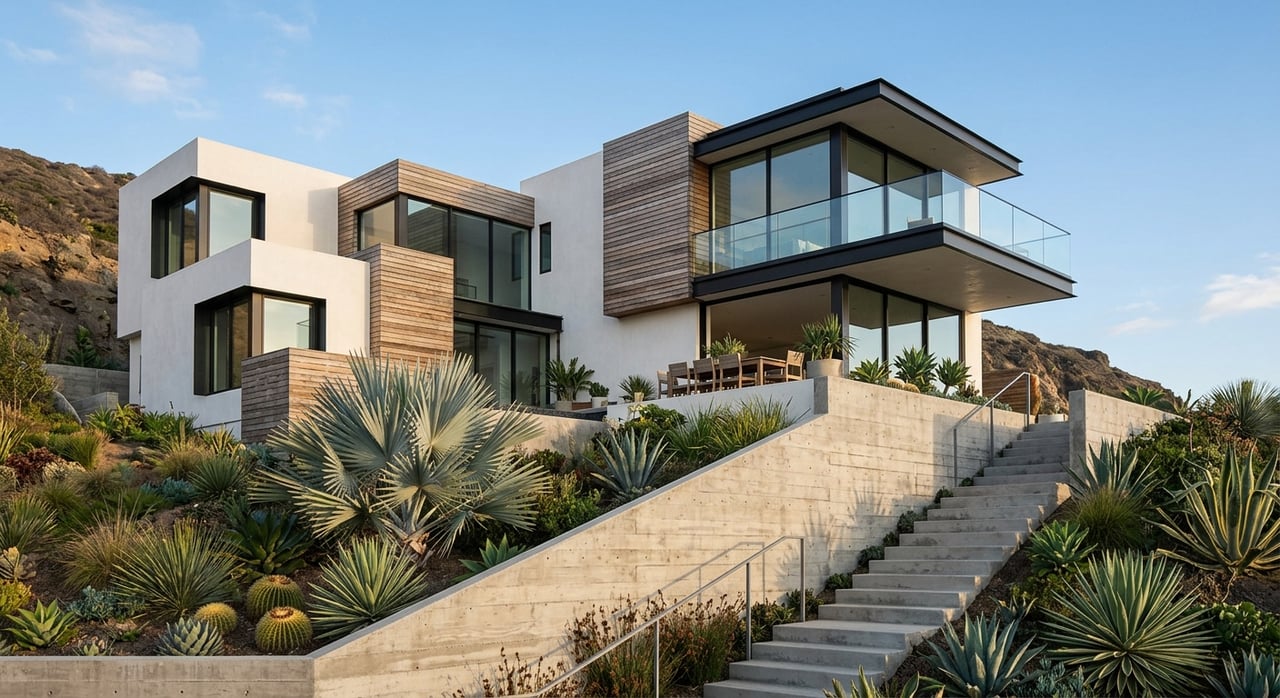
If you’re deciding between Cardiff’s Walking District and Composer District, you’re really choosing how you want daily life to feel. Both are part of Cardiff-by-the-Sea’s distinct coastal setting, but they offer different rhythms, street patterns, and housing experiences. If you want a clear, local breakdown of walkability, views, home styles, and buyer trade-offs, you’re in the right place. Let’s dive in.
Cardiff’s Character Matters
Cardiff-by-the-Sea is one of Encinitas’ five communities, set along the city’s six-mile Pacific coastline. The city describes its older coastal neighborhoods as primarily single-family residential, with some multi-family housing closer to the beach, small commercial lots along Highway 101, narrow uncurbed streets, and a pedestrian-oriented small-town feel.
That context matters when you compare these two districts. Cardiff is not a master-planned community with uniform housing or streets. It is a place where topography, lot layout, and long-standing planning rules shape how each pocket lives day to day.
Walking District vs Composer District
What the Walking District usually means
Locally, the Walking District usually refers to the flatter area south and east of central Cardiff. It is often associated with easier access to Seaside Market, the beach, and everyday errands on foot.
The name fits the experience. In general, this area feels more compact, more connected to town, and easier to navigate without constantly climbing hills.
What the Composer District usually means
The Composer District is generally the area north of Birmingham Drive, with winding, hillier streets named after composers. Historical sources tie this area to Victor Kremer, who developed the district and its 12 composer-named streets.
In practical terms, the Composer District tends to feel more elevated and more residential in character. Streets and homes often follow the slope, which can create a different sense of privacy, outlook, and design.
How Daily Life Feels Different
Walking District lifestyle
If you picture grabbing coffee, heading to Seaside Market, walking toward the beach, or running quick errands without thinking much about elevation, the Walking District usually aligns with that lifestyle. Its flatter terrain is one of the main reasons buyers focus here.
This part of Cardiff often delivers that classic compact beach-town feel. You may have less separation between homes than in some hillside pockets, but you gain convenience and a stronger sense of being close to the middle of everything.
Composer District lifestyle
The Composer District often appeals to buyers who want a quieter residential setting and do not mind hills. Because of the topography, getting around can feel less about quick errands on foot and more about enjoying a tucked-away neighborhood environment.
That trade-off can be worth it if you value elevation, a more custom-home feel, or stronger view potential. For many buyers, this area feels less about convenience-first living and more about privacy and outlook.
Home Styles and Lot Patterns
Walking District homes
The Walking District reads more like an older coastal neighborhood than a newer subdivision. Homes here are often midsize, with many dating back to around 1950 and evolving over time through remodels, additions, or redevelopment.
That creates variety. You may find original beach cottages, updated homes, twin homes, and parcels with infill potential, depending on the site and applicable planning rules.
Within the Cardiff specific-plan area, the Residential-11 zone allows single-family detached, attached, and multi-family housing at 8.01 to 11 dwelling units per net acre, with a minimum net lot area of 3,950 square feet. That helps explain why some Walking District properties feel compact and why lot use can vary block to block.
Composer District homes
The Composer District often feels more custom and view-driven. Listing examples in the research show a mix of larger-format homes, custom properties, twin homes with ocean views, and homes on larger lots with expansive outdoor living areas.
That does not mean every home is large or every lot is the same. It does mean the area more often presents the kind of hillside setting where custom design, outdoor decks, and view-oriented living become a bigger part of the conversation.
Ocean Views and Elevation
Where view potential is stronger
Cardiff’s planning framework places real value on preserving ocean views. The Cardiff-by-the-Sea Specific Plan includes policies tied to height, setbacks, and view corridors, and the city’s design standards also emphasize preserving or creating view opportunities through site planning and landscaping.
Because of slope and elevation, the Composer District generally has a stronger built-in chance for sit-down ocean views. That is an inference based on topography and planning context, not a guarantee for any specific property.
Why the Walking District still matters for views
The Walking District should not be written off if views matter to you. Certain elevated parcels or double-lot sites can still offer excellent ocean outlooks, and recent examples show that some homes in this area do capture broad views.
The difference is that view potential in the Walking District is often more parcel-specific. In the Composer District, the hillside setting makes views a more common part of the search criteria.
Walkability and Access
Why buyers love the Walking District
For buyers who care most about everyday walkability, the Walking District is usually the better fit. Flatter streets can make the neighborhood feel easier for day-to-day movement, whether you are heading toward town, the market, or the coast.
That convenience matches Cardiff’s pedestrian-oriented identity. If your ideal coastal lifestyle means using your car less and staying close to the center of local activity, this district often checks that box.
Composer District access is still strong
Choosing the Composer District does not mean giving up access to Cardiff and Encinitas amenities. Research examples point to walkable connections to Encinitas Community Park, the Coastal Rail Trail, the Santa Fe Drive underpass, Swami’s Beach and Park, and shops and restaurants in downtown Cardiff and Encinitas.
The difference is more about terrain and feel than complete access. You may still be near plenty of destinations, but the route and effort can differ from the flatter Walking District experience.
Pricing and Value Considerations
Cardiff should be viewed through a premium coastal lens. In April 2026, Redfin market data for zip code 92007 showed a median sale price of $2.4 million and a seller’s market, though that figure is a zip-code baseline and not a district-specific median.
Within that broader pricing range, values can move sharply based on ocean views, lot size, renovation quality, and parking. That is especially important in Cardiff, where two homes that seem geographically close can offer very different living experiences and resale profiles.
In simple terms, you are not just comparing one district to another. You are comparing convenience versus elevation, compact infill character versus custom hillside potential, and broad neighborhood appeal versus property-specific advantages.
What Buyers Should Verify Before Writing an Offer
In Cardiff, planning details matter. The specific plan uses planning-area-based lot-size and setback rules, and corner setbacks and view corridors can affect what can be built, preserved, or expanded.
Before assuming a home can be added onto or that a view will remain unchanged, verify the exact parcel dimensions and applicable rules. Buyers should pay close attention to:
- Lot dimensions
- Easements
- Height limits
- Setback requirements
- Corner-lot constraints
- Coastal or specific-plan restrictions
This is where local knowledge becomes especially valuable. In neighborhoods where pricing often reflects future potential as much as present condition, due diligence can make a major difference.
Which District Fits You Best?
Choose the Walking District if you value
- Flatter streets
- Easier day-to-day walkability
- A compact beach-town feel
- Close access to shops, the market, and the coast
- Older coastal-neighborhood character with varied housing types
Choose the Composer District if you value
- More elevation
- Stronger view potential
- A quieter residential setting
- A more custom-home feel
- Larger-lot or hillside-living possibilities on select properties
For most buyers, this is the real decision point. You are not choosing whether Cardiff is appealing. You are choosing whether your lifestyle priorities lean more toward daily convenience or toward privacy, elevation, and view upside.
If you want help weighing those trade-offs with real property data, pricing context, and mortgage planning built into the conversation, Seth Chalnick can help you compare Cardiff options with a local, numbers-driven approach.
FAQs
What is the Walking District in Cardiff-by-the-Sea?
- The Walking District usually refers to the flatter area south and east of central Cardiff, known for easier access to the beach, Seaside Market, and everyday errands.
What is the Composer District in Cardiff-by-the-Sea?
- The Composer District is generally the hillier neighborhood north of Birmingham Drive, with streets named after composers and a stronger reputation for elevation and view potential.
Which Cardiff district is more walkable?
- The Walking District is usually considered more walkable because its streets are generally flatter and closer to central Cardiff destinations.
Which Cardiff district has better ocean views?
- The Composer District generally has stronger built-in view potential because of its slope and elevation, though some Walking District properties also have excellent views on specific parcels.
Are home prices different between Cardiff’s Walking District and Composer District?
- Prices can differ significantly based on views, lot size, renovation quality, and parking, but the research only provides a Cardiff zip-code baseline, not district-specific median prices.
What should buyers check before buying in Cardiff-by-the-Sea?
- Buyers should verify parcel dimensions, easements, height limits, setbacks, corner-lot constraints, and any coastal or specific-plan rules before making assumptions about expansion or future view outcomes.