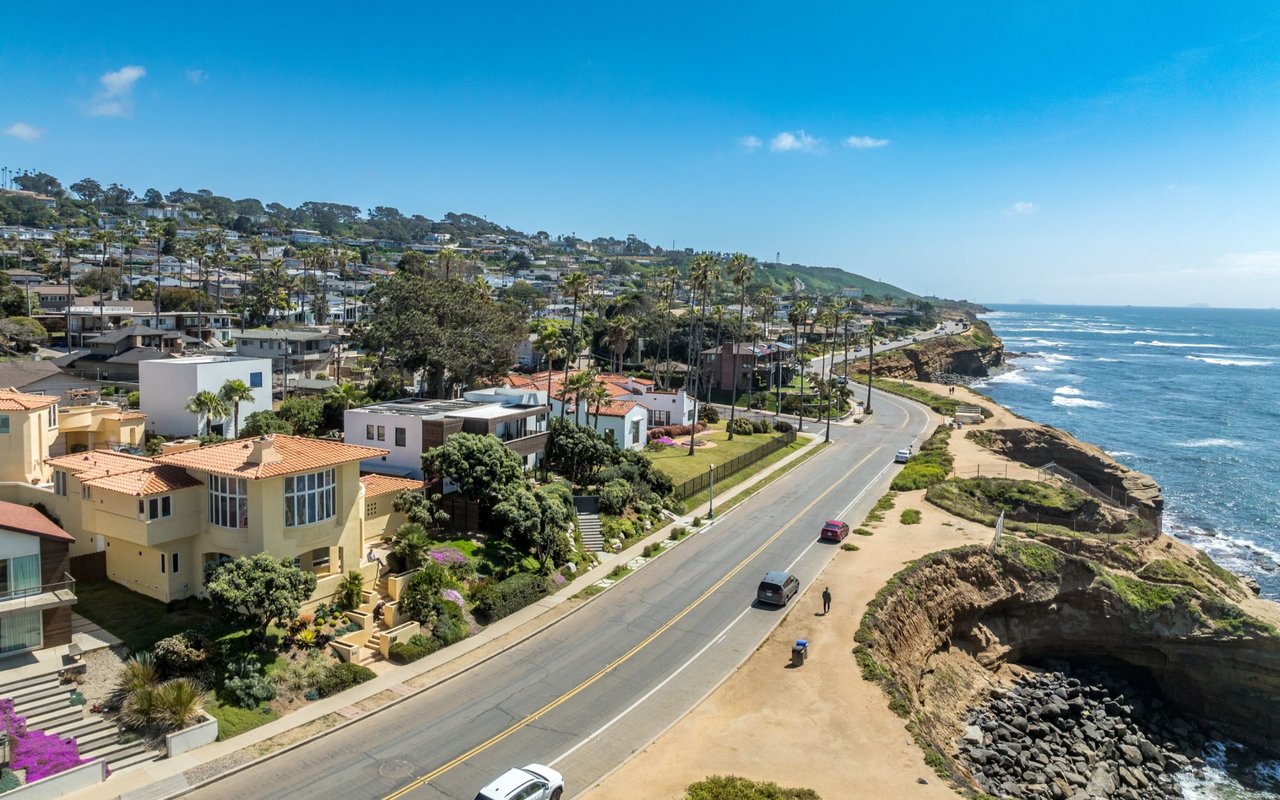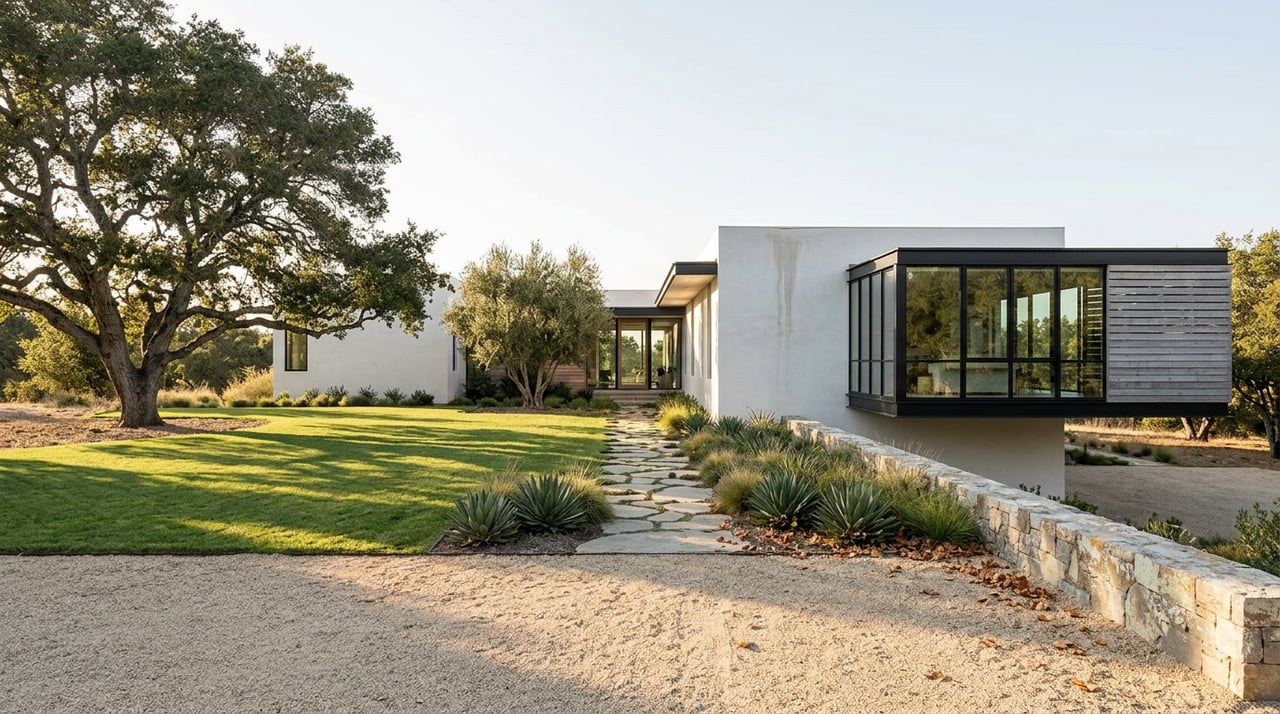
In October 2020, a single-level home on Crest Drive changed hands for $2,450,000. It sat on 43,996 square feet, a shade over an acre, with 2,260 square feet of living space, four bedrooms, three baths, built in 1960. The listing led with a finished, move-in ready home framed against sweeping backcountry views.
Five years later, the same address came back on the market. Same lot. Same 2,260 square feet. But the pitch had changed. The new listing invited buyers to "leverage plans-in-process to create your dream compound." It sold on September 5, 2025, for $3,500,000.
A structure that gained no additional square footage gained $1.05 million in value, a 43 percent increase in five years. That house is 1567 Crest Drive, and both sales were handled by Seth Chalnick of Shoreline Properties. The gap between those two numbers isn't a story about a hot market catching everything in its wake. It's a lesson in what actually gets priced on Crest Corridor's oversized lots, and it explains why the price-per-square-foot math that works fine elsewhere in coastal Encinitas can lead a buyer badly astray here.
The same numbers, told two ways
| October 2020 | September 2025 | |
|---|---|---|
| Sale price | $2,450,000 | $3,500,000 |
| Living area | 2,260 sq ft | 2,260 sq ft |
| Lot size | 1.01 acres | 1.01 acres |
| Marketing framing | finished, move-in ready home | site with development potential |
| Implied price per sq ft | $1,084 | $1,549 |
Nothing about the structure changed enough to explain a $465 jump in implied price per square foot. What changed was which market the seller was pricing into.
Two products wearing one price tag
On paper, Crest Corridor listings should comp the way most Encinitas neighborhoods comp: take the sale price, divide by square footage, compare it to the next listing down the street. That math holds up in a tract of similar homes on similar lots. It falls apart on a street like Crest Drive, where a snapshot from September 2025 showed just four active listings averaging 96 days on market, an average of $1,128.93 per square foot, and a median list price of $3,499,500. Averages like that hide more than they reveal when the sample is this small.
Look at two homes from that same window and the average stops meaning much. A 2,750 square foot home at 1153 Crest Dr was listed near $3,499,000, close to $1,272 per square foot. Meanwhile 729 Crest Drive, at 2,260 square feet, sold that summer for $2,095,000 through Shoreline Properties, closer to $927 per square foot. Same street, different sizes, a gap of roughly $345 per square foot.
That spread isn't noise. It's two different products being sold under one label.
What the second listing was really selling
The first sale of 1567 Crest Drive sold a house. The second sale, five years later, on the identical footprint, sold something closer to a building site with a house still standing on it. The 2020 marketing centered on the finished home. The 2025 marketing centered on what a buyer could do next, describing an oversized, usable lot and inviting a buyer to leverage "plans-in-process to create your dream compound." The structure hadn't gone anywhere. It had simply stopped being the point.
A structure that gained no additional square footage gained $1.05 million in five years. That gap didn't come from the house.
This distinction changes what a buyer should be comping against. A house priced as a house belongs next to other finished homes nearby, judged on condition, updates, and floor plan. A house priced as a site belongs next to raw land value, view tier, lot usability, and how close a buyer already is to breaking ground. Confuse the two and a buyer either overpays for what turns out to be a teardown, or underbids on a lot with real upside because the offer was built entirely around the square footage of a house that was never the real asset.
Why this works on Crest Drive and doesn't work most other places
Crest Drive carries no HOA. There's no architectural review board approving elevations or capping square footage, no association collecting dues to maintain a shared entry gate. That absence of a private governing layer is part of what makes the site-value play possible here in a way it typically isn't inside a planned Encinitas subdivision. A buyer who wants to demolish a 1960s ranch and build something larger on Crest Drive answers to the City of Encinitas' own permitting and Coastal Development Permit process, not to a homeowners' association first.
That freedom has been pulling redevelopment toward the corridor for years. Streets like Birmingham and Lake Drive have seen a run of teardowns and rebuilds, older cottages giving way to larger custom construction, while other blocks nearby still carry their original midcentury bones untouched. In practice, this leaves two kinds of buyers competing for the same listings: people who want a finished home now, and people who want the dirt, the view, and the freedom to build something else. Sellers who understand which buyer they're pricing to can move the same square footage for very different numbers.
Questions worth asking before you anchor on a number
Before treating any price-per-square-foot figure on Crest Drive, Wales, Via Tiempo, or the surrounding streets as a reliable comp, it helps to check:
- Does the listing lead with move-in condition, or with what could be built next?
- Is the home's age and original systems mentioned plainly, or minimized in favor of lot size and view?
- Are there references to plans, permits, or entitlement work already in progress?
- Has the property changed hands recently without a matching increase in finished square footage?
None of those questions has one right answer everywhere on the corridor. They just tell you which market you're actually shopping in before an offer gets written.
FAQ
Is Crest Corridor an official neighborhood? No. It's a name locals use for the area around Crest Drive, Wales, Lake, and Via Tiempo. It isn't a formally platted subdivision or an HOA community.
Does having no HOA mean there are no rules on rebuilding? No. It means there's no private design review layer stacked on top of the City of Encinitas' own permitting and Coastal Development Permit process, which still applies to any new construction here.
Is the $1,128.93 average price per square foot from September 2025 still the right number to use today? Treat it as a historical snapshot, not a live figure. With only a handful of active listings on the street at any given time, a single sale can swing that average significantly. Ask for a current, address-specific read before pricing a purchase or a listing.
If you're weighing a Crest Corridor address against anything else in coastal Encinitas, the price-per-square-foot number is a starting question, not an answer. Seth Chalnick and the team at Shoreline Properties price these streets the way they actually trade, structure value kept separate from site value, and can tell you which one you're looking at before you make an offer. Request a free Seller's Survey and Market Consultation to get a straight read on what a specific Crest Corridor property is really priced to sell.
This article is general information, not legal, tax or financial advice. Consult a qualified professional about your situation.